
Lithops Pseudotruncatella Callus Lysate
Lithops Pseudotruncatella Callus Lysate is a specialist plant stem-cell extract derived from the curious living-stone succulent. In skincare it is used as a gentle yet powerful botanical active that helps support skin renewal and resilience. It is prized in clean and sustainable UK formulations for its ability to deliver antioxidant and soothing benefits without irritation.
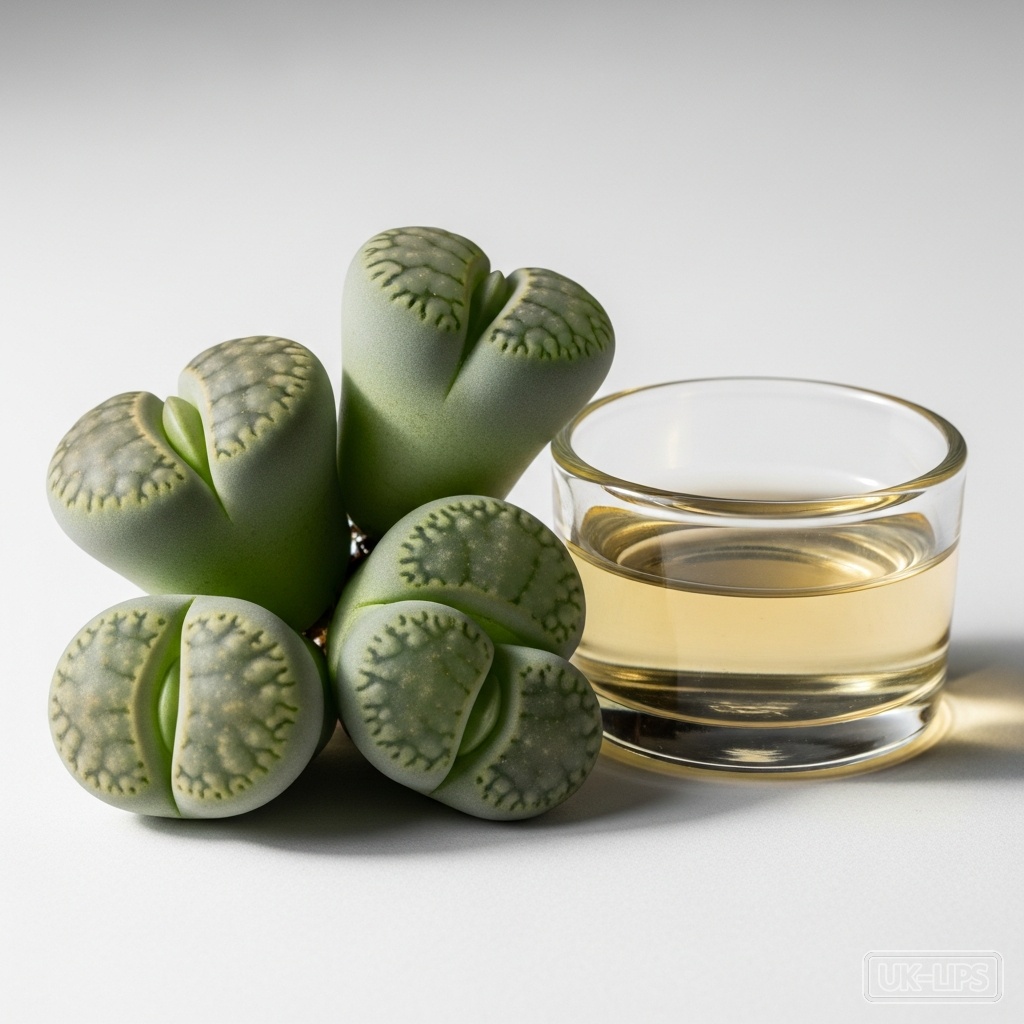
How it works in skincare
In cosmetics and skincare Lithops Pseudotruncatella Callus Lysate works by supplying a concentrated mix of plant-derived peptides, polysaccharides and secondary metabolites obtained from cultivated callus cells of the succulent. These bioactive components help reinforce the skin’s natural barrier, support collagen and elastin maintenance, and provide antioxidant protection against environmental stressors. The lysate is typically incorporated into serums, creams and masks at low percentages where it delivers a silky feel and enhances overall skin comfort and appearance.
Key benefits
- Helps reinforce the skin barrier
- Offers antioxidant protection
- Supports skin renewal and resilience
- Soothes and calms the complexion
- Improves skin smoothness and softness
- Enhances overall skin comfort
Best for
sensitive skin, mature skin, dry skin, dull skin, stressed skin
Where it comes from
Lithops pseudotruncatella, commonly known as living stones, is a dwarf succulent native to the arid regions of Namibia and South Africa. The lysate is produced from laboratory-cultivated callus cells of the plant rather than harvesting wild specimens, making it a sustainable and renewable botanical ingredient.
Products with Lithops Pseudotruncatella Callus Lysate
Not every product on UK Lips lists a full ingredient breakdown — so there may be many more formulas that contain Lithops Pseudotruncatella Callus Lysate than we can show here. These are the comparisons where we’ve confirmed it in the listed ingredients.