
Leather
Leather is rarely used in modern cosmetics but historically appears in some traditional fragrance bases, leather accords in perfumes, and very occasionally in specialised accessory or nail care products. In beauty it is valued for its rich, warm, animalic scent profile rather than any direct effect on skin or hair. Most “leather” notes found in UK beauty products today are synthetic recreations rather than actual animal-derived material.
How it works in skincare
In cosmetic formulations leather extracts or leather fragrance accords are used primarily in fine perfumery to impart a sophisticated, smoky, slightly sweet and earthy olfactory character. When genuine leather derivatives are employed they are typically highly purified hydrolysates that can act as film-forming or conditioning agents in niche hair or nail products, although such use is uncommon in mainstream British skincare and makeup.
Key benefits
- Delivers a distinctive warm, sophisticated scent in fragrances
- Can provide a subtle conditioning film on hair or nails in specialist formulas
- Adds depth and longevity to woody or oriental perfume compositions
- Creates a luxurious sensory experience in niche beauty products
- Blends well with floral, citrus and smoky notes in UK fragrance design
Best for
Not typically used for skin benefits, Suitable for fragrance lovers seeking sophisticated scents
Where it comes from
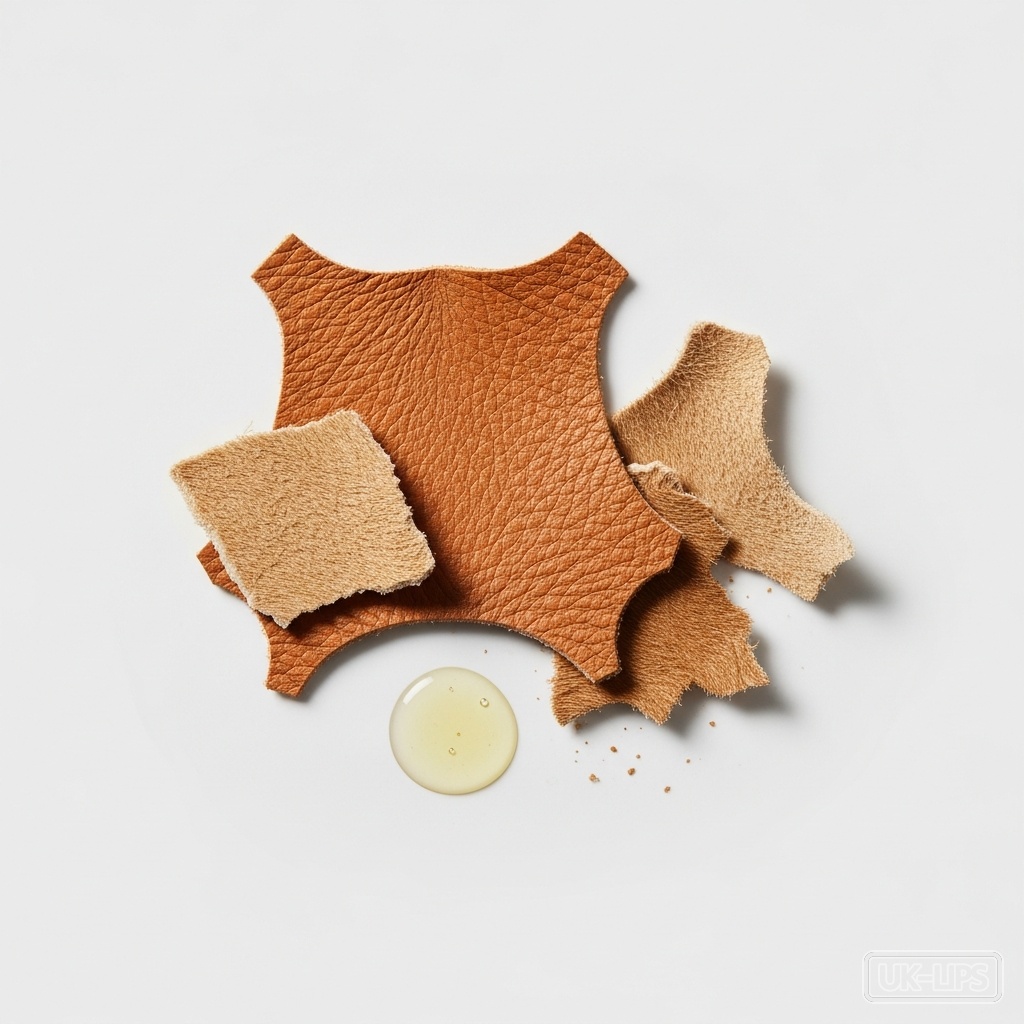
Leather is an animal-derived material obtained from the tanned hides of cows, sheep or goats. In cosmetic contexts any genuine leather ingredient comes from the tanning and hydrolysis of these hides rather than a plant, mineral or flower source.
Products with Leather
Not every product on UK Lips lists a full ingredient breakdown — so there may be many more formulas that contain Leather than we can show here. These are the comparisons where we’ve confirmed it in the listed ingredients.