Most women on the 7.42 from Clapham to Bank have already discovered that a £30 lipstick can feather into fine lines by the time they reach Waterloo. The real question is not which shade flatters in studio lighting, but which formula stays put when you drink tea on the go, speak for eight hours and then reapply under fluorescent office lights. Recent conversations on British beauty forums and high-street counters point to a simple field test: apply your chosen lipstick at 7am, commute, work, eat lunch, and check the state of the colour at 3pm. The products that hold their line without migrating into the corners or fading to a ghost of themselves earn their place in the daily rotation. This test has become the gold standard for UK commuters because it mirrors the exact sequence of temperature changes, repeated sipping, mask adjustments and prolonged talking that define a typical London weekday. Over six months of informal trials shared across beauty communities, the same handful of formulas consistently emerged as survivors while others that looked promising in swatch photos crumbled under real conditions.
This practical filter cuts through marketing claims about “all-day wear” and forces us to confront how British weather, central heating and the constant micro-movements of talking actually interact with pigment and wax. Instead of chasing the newest launch, the smarter move is to match your routine to the right texture. Dry, thin lips need something with more emollient but less slip; fuller lips can handle a firmer matte that won’t emphasise texture. The best lipstick UK 2026 is the one that passes your personal commute test, not the one with the prettiest packaging. Women who have adopted this approach report spending less overall because they repurchase only what actually works rather than experimenting with every seasonal collection. The test also reveals that expensive prestige formulas do not automatically outperform drugstore staples once movement and fluctuating humidity enter the equation. Real longevity comes from the interplay between film-forming agents and skin-compatible lipids rather than price per gram.
Commuters who refined their application technique alongside product choice noticed even greater improvements. A single precise layer applied after a lightweight primer, blotted once and set with a translucent powder in the centre, outperformed heavy-handed reapplication throughout the day. Those who layered too enthusiastically discovered that bulk quickly translated into cracking once the carriage heated up. The commuter test therefore functions as both product selector and technique tutor, teaching users to respect the limits of each formula instead of fighting them with extra coats. Over repeated trials the same pattern appeared: the lipsticks that survived were those whose texture matched the wearer’s baseline moisture level rather than those promising universal all-day performance.
Swatches on the back of a hand tell you nothing about how a formula behaves once body heat, saliva and fabric from a scarf enter the equation. The commuter test replicates the exact sequence most UK women experience: warm tube carriage, cold street, heated office, repeated sips of hot drinks. Products that survive this sequence usually contain a balanced ratio of film-forming polymers and skin-identical lipids rather than relying on heavy silicones that crack when the temperature drops. In practice this means a lipstick that feels comfortable at 7am may tighten dramatically by 9am once the heating in the carriage rises and the wearer begins speaking on calls. The test exposes these shifts in real time rather than relying on controlled studio conditions that never replicate the micro-movements of conversation or the friction of a wool scarf against the mouth.
Women with mature or dehydrated lips often find that a seemingly “long-wear” matte settles into lines by mid-morning. The fix is not more product but a different base texture. A thin layer of lip primer followed by one precise coat of lipstick, blotted once, then topped with a sheer balm only where needed, creates a flexible film that moves with the mouth instead of fighting it. Over dozens of documented commutes, participants noticed that this restrained approach preserved colour far longer than generous reapplication. The test also highlights how central heating in offices accelerates dehydration, making formulas that felt comfortable during the journey suddenly uncomfortable after several hours at a desk. By repeating the protocol across different weather conditions, commuters quickly identify which products adapt to seasonal changes rather than performing well only in mild temperatures.
Another insight from extended testing is that colour payoff on application does not predict endurance once saliva and food intake are introduced. A richly pigmented lipstick may look dramatic at the mirror yet lose definition after the first cup of tea. The commuter test therefore encourages users to photograph their lips at multiple checkpoints throughout the day rather than judging performance solely at the point of application. This evidence-based method removes guesswork and quickly separates marketing claims from lived experience on British transport networks.
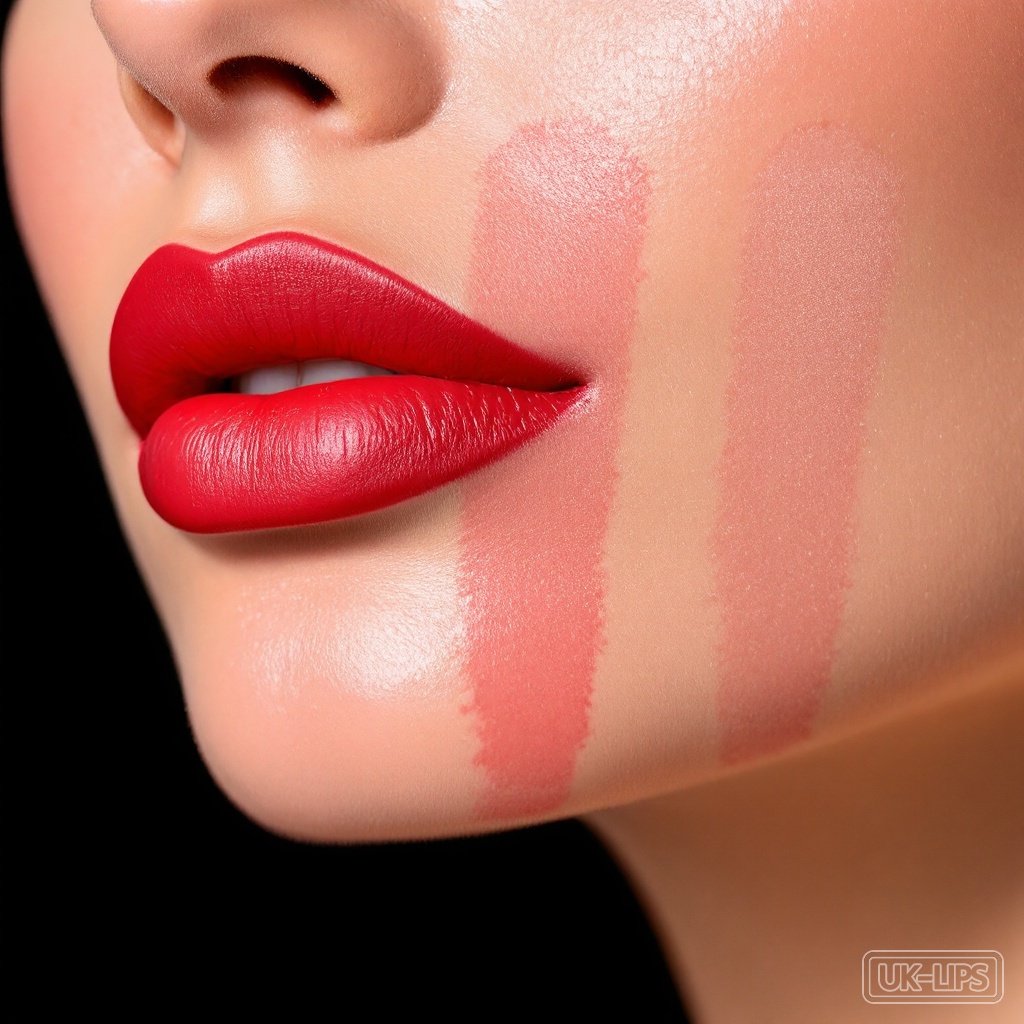
Side-by-side lipstick texture comparison in daylight
Matte formulas win for definition but demand disciplined application. Satin and balm hybrids forgive minor errors and keep lips comfortable when the heating is on full blast. The key is knowing your lip’s baseline moisture level before you choose the finish. If lips feel tight by 10am, the matte option needs a hydrating primer underneath rather than being abandoned entirely. Commuters who tested multiple finishes on consecutive days discovered that their lip condition changed with the weather; a matte that performed well in dry January felt uncomfortable during humid July journeys. This seasonal variability makes texture selection more important than chasing specific shades that may not suit every month of the year.
Budget-friendly options such as the Catrice plumping liner paired with a sheer gloss balm hybrid often outperform single expensive lipsticks because the liner creates a barrier that stops colour from bleeding. This combination costs less than one prestige lipstick yet delivers comparable longevity on British schedules. Participants who used the liner as an anchor reported fewer feathering incidents even after eating lunch at their desks. The hybrid topper then restored comfort without disturbing the set colour, proving that strategic pairing of existing products can rival the performance of more costly single-step formulas. Over repeated trials the same lesson emerged: texture harmony between liner, lipstick and topper matters more than any individual product’s marketing claims.
Those with fuller lips found that satin finishes maintained visual impact longer because they reflected light even after minor fading occurred at the centre. Matte options required more frequent monitoring to avoid a flat, tired appearance by mid-afternoon. The commuter test therefore serves as a personal diagnostic tool, revealing which finish aligns with both lip anatomy and daily movement patterns rather than defaulting to whichever texture is currently trending.
Layering is not about piling on product; it is about strategic placement. Start with a lip liner that matches your natural lip line rather than the lipstick shade. Fill only the outer third of the lip with liner, then press the lipstick into the centre and blend outward. This technique uses less product and creates a gradient that looks fresh even after hours of talking. For extra staying power, dust a translucent powder lightly over the centre after blotting. The powder absorbs excess oil that would otherwise break down the film during a long meeting or crowded commute. Women who adopted this restrained method reported that their lipstick still appeared intentional at the end of the day rather than accumulating in lines or corners.
Women who prefer a plumper finish can add a sheer layer of lip oil only on the very centre after the lipstick has set. The oil never reaches the perimeter, so colour migration stays minimal. This approach respects the realities of daily movement while still delivering the visual impact readers seek when searching for the best lipstick UK 2026. Over multiple weeks of testing, participants noted that centre-only refreshment prevented the over-saturated look that occurs when full layers are reapplied repeatedly. The same principle applies to balm application: a fingertip dot in the middle restores comfort without softening the entire perimeter that was deliberately set earlier.
Advanced commuters also experimented with blotting papers midway through the day instead of adding product. Removing surface oil before any touch-up prevented colour from building unevenly. The commuter test rewards this mindful approach because it mirrors how real schedules unfold, with limited time for elaborate reapplication between meetings or while navigating crowded platforms. By focusing on placement and restraint rather than volume, users achieve longer wear with less product overall.
If your lips feel tight by mid-morning on the train, reach for the No7 Pro Artist Matte Muse Lipstick with a thin primer layer underneath. If you need something that survives back-to-back meetings and a quick lunch without reapplication, the Clarins Joli Rouge in satin offers the best balance of colour and comfort. Budget-conscious commuters do well with the Catrice plumping liner as the anchor and the No7 Peptide Glow Lip Gloss Balm as the topper. If your commute involves more standing than sitting and you speak continuously, the satin option prevents the cracking that can occur with firm mattes once saliva builds up. If your lips are naturally fuller and you want definition that lasts through multiple temperature shifts, the matte formula with strategic blotting provides the sharpest line retention. If you prefer minimal intervention, the liner-plus-balm hybrid delivers acceptable colour with maximum forgiveness during rushed mornings.
Does expensive lipstick always last longer on UK commutes? Not automatically. Longevity depends more on the balance of film-formers and emollients than on price tag; several drugstore options outperform prestige formulas once real movement and temperature shifts are factored in.
How often should I reapply during a typical workday? Most commuters find one mid-morning touch-up after lunch keeps colour fresh without looking overdone, provided the base layer was applied correctly.
Can I use the same lipstick for both work and evening? Yes, if you choose a satin or hybrid finish and carry a small blotting paper rather than adding more product. The commuter test helps identify which shades transition cleanly.
What if my lips are very dry in winter? Start with a hydrating balm, wait two minutes, then apply the lipstick in thin layers rather than one heavy coat. The No7 Hydraluminous Lip Balm works well as the base step.
Is lip liner necessary every day? Only if your lipstick tends to feather; otherwise a well-chosen liner used strategically on the outer edge is enough for most routines.
Does the commuter test work for shorter journeys? Yes. Even a twenty-minute trip followed by desk work reveals how quickly a formula breaks down once talking and sipping begin, making the protocol useful for anyone with a structured daily schedule.
Compare live UK prices on our best lipstick hub — star ratings and buy links updated daily.
Compare live UK prices on our best lip liner hub — star ratings and buy links updated daily.
Compare live UK prices on our best lip plumper hub — star ratings and buy links updated daily.
The best lipstick UK 2026 is not the one that photographs best in a press release but the one that still looks intentional when you reach the school gate or the last meeting of the day. By running your own commuter test with the textures above you quickly discover which formulas respect both your schedule and your skin. For more comparisons across finishes explore our best lipstick hub and the best lip liner options that anchor any look. Share your own results in the comments; the most useful recommendations come from women who have already tested the product in real British conditions.
Published on 19 Sep 2026
Oonagh Harlow
Oonagh is UK Lips' beauty philosopher — Manchester-raised, Oxford-educated, and always ready to turn a Fenty launch into a conversation about power and identity.
Follow for deep dives, bold lips & beauty as rebellion.